


Introduction
In 2026, having a mobile app in the UK isn’t just a competitive advantage — for many businesses, it’s becoming a basic expectation. British consumers rely heavily on their smartphones for everyday activities, from online shopping and banking to booking appointments and ordering food. Whether someone is commuting in London, running a small business in Manchester, or shopping from home in Birmingham, mobile-first experiences are powered by mobile app development services in the UK. If your business isn’t easily accessible through a well-designed app built by a professional mobile app development company, there’s a strong chance your competitors already are.
At the same time, customer expectations are higher than ever. People expect fast loading speeds, seamless payments, personalised recommendations, and secure data handling. Industries such as retail, healthcare, logistics, fintech, and property are all investing in mobile solutions to improve efficiency and build stronger relationships with their customers. A mobile app is no longer just about visibility — it’s about creating a smooth, reliable experience that builds trust and loyalty over time.
However, one of the first and most important questions UK business owners ask is: How much does it actually cost to develop a mobile app? The answer isn’t straightforward. Costs can vary significantly depending on the type of app, features required, platform choice, design complexity, security requirements, and ongoing maintenance. Understanding these factors early helps you avoid unexpected expenses and plan your investment wisely.
This guide is designed to give you a clear, realistic view of mobile app development costs in the UK in 2026 — so you can make informed decisions, set the right budget, and move forward with confidence.
Estimated Mobile App Development Costs in the UK
Mobile app development costs in the UK largely depend on the app's complexity, the number of features, and the level of customisation required. Below is a more detailed and professionally structured breakdown for 2026:
Basic apps typically cost between £2000 and £5000 and usually take around 2 to 4 months to develop. These are best suited for startups and small businesses that need a simple user interface with limited screens. Such apps generally include basic login and signup functionality, static content, support for a single platform (either iOS or Android), and a minimal backend setup.
Standard or moderate apps fall within the £5000 to £8000 range and take approximately 4 to 6 months to complete. These are ideal for growing businesses that require more functionality and customization. They usually include custom UI/UX design, API integrations, payment gateway support, push notifications, an admin panel, and are often developed for both iOS and Android platforms.
Complex apps typically cost between £10,000 and £18,000 and require about 6 to 9 months of development time. These are suitable for established companies that need advanced features. Such apps often include real-time updates, dashboards, analytics, third-party integrations, role-based access control, and a scalable backend infrastructure.
Advanced or enterprise-level apps generally start from £18,000 and can exceed £40,000, with development timelines ranging from 9 to over 18 months. These are designed for enterprises and funded startups that need highly sophisticated solutions. They commonly include AI and machine learning capabilities, AR/VR features, high-level security, cloud infrastructure, multi-platform support, heavy data processing, and fully customized architecture.
Factors Affecting Mobile App Development Cost in the UK
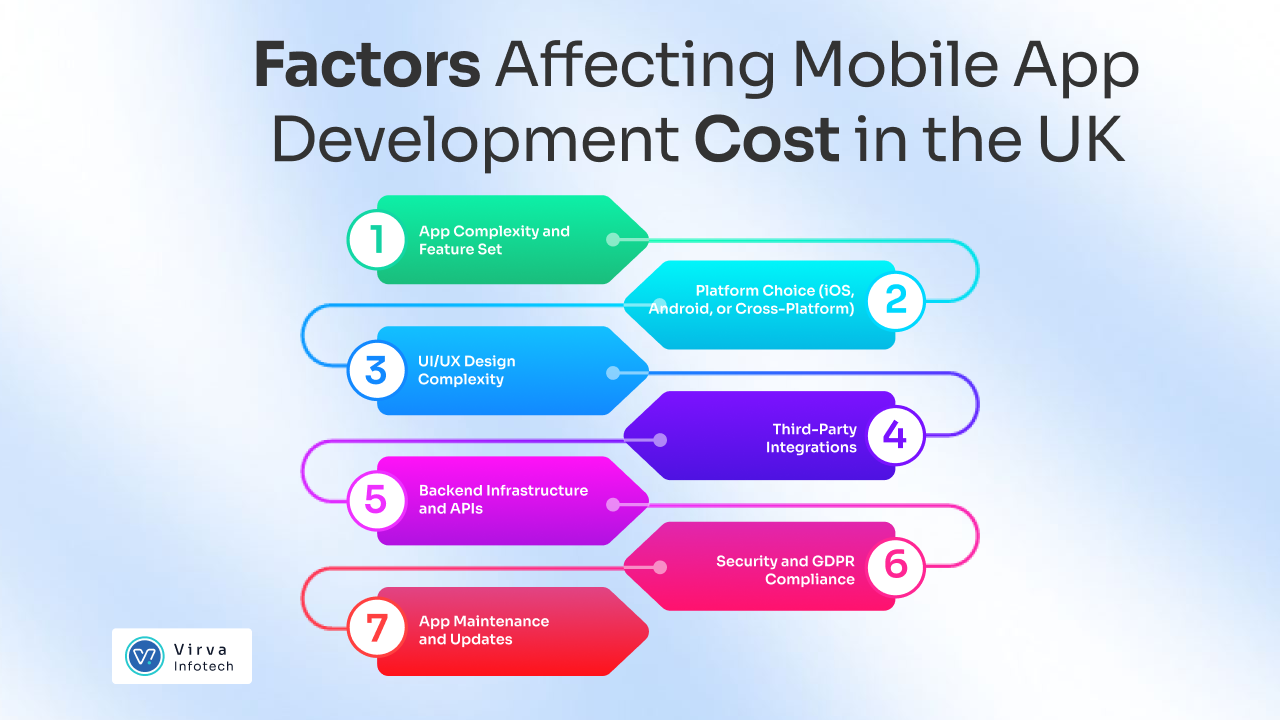
1. App Complexity and Feature Set
Developing a complex mobile app incurs additional costs. Mobile applications featuring uncomplicated login, static interfaces, and limited functionality are significantly less expensive than those that offer real-time tracking via custom software development solutions (through payment gateways) and AI recommendations (via dashboards or embedded systems). Each extra feature necessitates additional development time, testing hours and back-end support, which directly affects your budget.
2. Platform Choice (iOS, Android, or Cross-Platform)
Choosing between native app development (separate apps for iOS and Android) and cross-platform development significantly affects cost. Native apps typically offer better performance but require separate coding, which increases expenses. Cross-platform frameworks like Flutter or React Native reduce development time and cost by using a single codebase for both platforms.
3. UI/UX Design Complexity
UX is a top priority in the highly competitive UK digital market.' Developing an extremely highly customised UI/UX design with animations, interactive elements and heavily branded visuals takes more time than designing and front-end developing. A user-friendly and uncluttered interface is less expensive than a completely customised design that includes advanced user journeys
4. Development Team Location in the UK
Mobile app development rates vary by city. Agencies in London generally charge higher hourly rates compared to companies in Manchester, Birmingham, or Glasgow. The overall cost also depends on whether you hire a local UK agency, freelancers, or a hybrid/offshore development team.
5. Backend Infrastructure and APIs
Apps that require backend servers, cloud storage, and databases using scalable software development services or third-party API integrations will increase development costs. For example, integrating payment gateways, CRM systems, GPS tracking, or social media logins requires additional development time and technical expertise.
6. Security and GDPR Compliance
In the UK, data protection regulations such as GDPR must be strictly followed. Apps handling personal data, financial transactions, or healthcare information require enhanced security features implemented through secure software development practices like encryption, secure authentication, and compliance checks. Implementing these security measures adds to development and maintenance costs.
7. Third-Party Integrations
If your mobile app connects with external services such as payment processors, analytics tools, chat systems, or marketing automation platforms, integration costs will apply. Some third-party services also charge subscription fees, which should be included in your long-term budget planning.
8. App Maintenance and Updates
Mobile app development does not end after launch. Regular updates, bug fixes, performance optimisation, and compatibility updates with new iOS and Android versions are necessary. In the UK, annual maintenance typically costs around 15–20% of the initial development cost.
9. Testing and Quality Assurance
Comprehensive testing ensures your app works smoothly across different devices and operating systems. The more complex your app, the more extensive the testing required. Automated testing, manual testing, security testing, and performance testing all contribute to the total development cost.
10. App Store Deployment and Licensing Fees
Publishing your app on the Apple App Store and Google Play Store involves registration fees and compliance requirements. Additionally, preparing store listings, screenshots, and optimised descriptions may require professional support, adding to overall expenses.
11. Post-Launch Marketing and User Acquisition
Even the best mobile app needs marketing to succeed. UK businesses often invest in app store optimisation (ASO), paid ads, social media marketing, and influencer campaigns. Marketing costs are separate from development but play a major role in the overall investment required for a successful app launch.
App Development Cost Comparison Across UK Cities
Mobile app development costs in the UK can vary significantly depending on the city you choose to work in. Factors such as developer availability, office rent, local demand for tech services, and the overall economic environment influence pricing. Below is a detailed breakdown of major UK cities and how they compare in terms of mobile app development cost and value.
London
London remains the most expensive city in the UK for mobile app development. As the country’s leading tech and financial hub, it offers access to highly experienced developers, specialised tech agencies offering enterprise mobile app development services, and cutting-edge innovation. Many fintech, AI, and enterprise-level applications are developed here due to the availability of top-tier talent.
However, higher office rents and operational costs increase agency pricing. Businesses choosing London-based app development companies can expect premium service, advanced technical expertise, and strong project management standards — but at a higher investment level. London is often ideal for complex, enterprise-grade, or investor-backed mobile applications.
Birmingham
The city of Birmingham strikes a good balance between quality and affordability. Despite the city's growing digital ecosystem and skilled developers, operating expenses are lower than in London. Birmingham is a viable option for small to mid-sized businesses seeking high-quality features in their app without spending too much.
Mobile app development companies in Birmingham are primarily focused on developing medium-complexity applications, such as e-commerce apps, booking systems, and service-based business platforms. Often, it's seen as an economical alternative to London while still maintaining high development standards.
Manchester
One of the UK's top tech cities, after London. The city of Manchester, with its thriving startup scene and vibrant innovation community, is also known for its superior quality development services at more competitive rates.
With app development costs that are typically lower than those of London and Birmingham, this location is a good starting point for startups and scale-ups. The city is a perfect spot for MVP development, SaaS-based mobile apps built with custom software development solutions, and growing businesses seeking reliable development partners without paying excess fees.
Glasgow
Glasgow is one of the most budget-friendly cities for mobile app development in the UK. Lower office costs and competitive hourly rates make it an appealing option for startups and businesses working with limited budgets.
While Glasgow offers excellent value, businesses developing highly complex or enterprise-level applications may find a smaller talent pool compared to London or Manchester. However, for standard business apps, service platforms, and early-stage products, Glasgow can be a smart and economical choice.
Estimated Mobile App Development Cost Across UK Cities
Mobile app development costs in the UK vary depending on the city, project complexity, and business requirements. In London, the estimated cost typically ranges between £10,000 and £15,000, making it most suitable for enterprise-level applications, fintech solutions, and AI-based platforms that require advanced functionality and high-end development standards. In Birmingham, development costs are slightly lower, ranging from £8,000 to £10,000, and are ideal for medium-complexity business applications that need a balance between performance and affordability.
Manchester offers a more cost-effective option, with app development costs usually between £5,000 and £8,000. This makes it a popular choice for startups, SaaS platforms, and MVP development, where businesses aim to validate their ideas with controlled budgets. Meanwhile, Glasgow provides some of the most budget-friendly development options in the UK, with costs ranging from £2,000 to £8,000. It is particularly suitable for early-stage applications and businesses looking to build initial versions of their product without significant upfront investment.
Mobile App Development Process (Step-by-Step Guide for UK Businesses)
.png)
Understanding the mobile app development process helps UK businesses plan timelines, manage budgets, and avoid unexpected delays. Below is a detailed explanation of each stage involved in building a successful mobile application.
1. Research & Planning (£550 – £2000)
This is the foundation of your entire mobile app project. During this phase, the development team works closely with you to understand your business goals, target audience, revenue model, and long-term vision. Market research is conducted to analyse competitors in the UK market and identify opportunities for differentiation.
Key activities include defining app features, creating a project roadmap, choosing the right technology stack, and estimating timelines and budgets. Proper planning at this stage reduces costly changes later and ensures your app solves a real problem for users.
2. Wireframing & Prototyping (£800 – £2000)
Once the strategy is clear, the next step is to create wireframes — simple visual layouts that outline the structure of each screen. Wireframes focus on functionality rather than design, showing how users will navigate through the app.
Prototyping takes it a step further by creating clickable mock-ups that simulate the user journey. This helps stakeholders visualise the app before development begins. Early feedback during this stage saves time and prevents expensive design revisions later in the project.
3. UI/UX Design (£1,000 – £1500)
The UI/UX design phase focuses on creating an engaging, user-friendly, and visually appealing interface. In the competitive UK digital landscape, user experience plays a major role in app success.
Designers work on branding elements, colour schemes, typography, animations, and interactive components. UX designers ensure the app is intuitive, easy to navigate, and optimised for user engagement. A well-designed app increases customer satisfaction and improves retention rates.
4. Development (£5,500 – £8,000)
This is where the actual coding begins. The development phase includes both frontend (what users see) and backend (server, database, APIs) development.
Frontend developers build the user interface based on approved designs, while backend developers handle data processing, user authentication, security, and integrations with third-party services. The cost varies depending on whether you choose native app development (iOS and Android separately) or cross-platform development.
This stage usually consumes the largest portion of the total budget because it involves the most technical work and hours.
5. QA & Testing (£1,100 – £15,00)
Before launching the app, thorough quality assurance (QA) testing is conducted to ensure everything works smoothly. Testing includes checking for bugs, security vulnerabilities, performance issues, and compatibility across different devices and operating systems.
In the UK market, delivering a stable and secure mobile app is essential for building user trust. Proper testing helps prevent negative reviews, technical failures, and costly fixes after launch.
6. Launch (£500 – £800)
Once testing is complete, the app is prepared for submission to the Apple App Store and Google Play Store. This process includes setting up developer accounts, preparing app descriptions, uploading screenshots, configuring keywords, and ensuring compliance with store guidelines.
The launch phase may also involve soft launching (limited audience release) to gather feedback before a full public release. Proper app store optimisation (ASO) can improve visibility and downloads.
7. Post-Launch Support & Maintenance (£1,200 – £1800+ per month)
Mobile app development doesn’t end at launch. Ongoing maintenance is essential to keep the app updated with new operating system versions, fix bugs, enhance performance, and add new features based on user feedback.
Most UK app development companies recommend budgeting around 15–20% of the initial development cost annually for maintenance. Continuous improvement ensures your app remains competitive and secure in the fast-evolving digital market.
Hidden Mobile App Development Costs in UK
Development costs are typically the only factors considered when planning for mobile app spending by businesses in the UK. Still, various covert costs can have a significant impact on the overall investment. A straightforward breakdown of the most common concealed mobile app development expenses in the UK is presented below.
GDPR & Data Protection Compliance
In the UK, apps that collect user data must comply with UK GDPR and Data Protection Act regulations. This may require legal consultation, secure data storage systems, encryption, and privacy documentation. Compliance setup and audits can add unexpected costs to your project.
App Store & Play Store Fees
Publishing your app on the Apple App Store and Google Play Store may result in developer account fees and potential in-app transaction commissions. Each platform can take a cut of in-app purchases from an annual fee paid by Apple, and both platforms may also collect. These recurring expenses should be factored into your financial plan.
Ongoing Maintenance & Updates
After launch, your app will need regular updates for OS changes, bug fixes, and performance improvements. In the UK market, maintenance typically costs around 15–25% of the original development cost annually. Ignoring this can lead to performance issues and poor user retention.
Cloud Hosting & Server Infrastructure
Most modern apps rely on cloud platforms for data storage, APIs, and scalability. Monthly hosting costs vary depending on traffic, storage, and security needs. As your user base grows, infrastructure costs increase accordingly.
Third-Party API Integrations
Payment gateways, maps, SMS services, analytics tools, and AI features often require paid APIs. Many third-party services operate on subscription or usage-based pricing. These ongoing costs are often underestimated during initial planning.
UI/UX Improvements After Testing
User feedback often reveals the need for design changes or feature refinements after beta testing. Improving user experience may require additional design and development hours. This refinement phase is essential but frequently overlooked in early budgets.
Security Enhancements
With increasing cyber threats in the UK digital market, additional security layers such as penetration testing, advanced authentication, and encryption protocols may be required. Strong security protects user trust but adds extra cost to development.
Marketing & User Acquisition
Launching the app is only the beginning — you’ll need marketing campaigns, paid ads, ASO (App Store Optimisation), and social media promotions. Without proper promotion, even a well-built app may struggle to gain downloads. Marketing budgets can sometimes exceed development costs.
Scalability & Performance Optimisation
If your app suddenly gains traction, performance upgrades may be required to handle higher traffic loads. Scaling servers, improving database efficiency, and upgrading architecture can add unplanned expenses.
Business & Administrative Costs
Additional investment may be required for projects, legal agreements, trademark registrations and business licensing in the UK. Real-world app development involves these operational expenses, which are not often discussed.
How to Choose a Mobile App Development Company in the UK
(1) Check Proven Experience & UK Market Understanding
Choose a company with a strong portfolio of mobile apps developed for UK businesses. Review case studies, client testimonials, and industries served to ensure they understand local consumer behaviour, regulations, and market trends. A company familiar with the UK digital ecosystem will deliver better compliance, performance, and user experience.
(2) Evaluate Technical Expertise & Technology Stack
Make sure the development team has expertise in native iOS and Android development as well as cross-platform frameworks like Flutter or React Native. Ask about their experience with cloud infrastructure, API integrations, payment gateways, and scalable architecture. A technically sound team ensures your mobile app is secure, future-ready, and optimised for performance.
(3) Understand Their Development Process & Transparency
A professional UK app development company should follow a structured process including discovery, wireframing, UI/UX design, development, testing, and post-launch support. Clear timelines, milestone tracking, and transparent pricing are essential to avoid unexpected costs. Regular communication and project updates reflect reliability and professionalism.
(4) Prioritise Compliance, Security & GDPR Knowledge
Data protection is critical in the UK market. Ensure the company understands UK GDPR requirements, secure data handling, encryption standards, and cybersecurity best practices. Strong compliance knowledge protects your business from legal risks and builds trust with your users.
(5) Post-Launch Support & Long-Term Partnership
Mobile app development does not end at launch. Choose a company that offers ongoing maintenance, updates, scalability support, and performance optimisation. A long-term technology partner will help your app grow alongside your business in the competitive UK digital landscape.
How Virva Infotech Helps You Build the Best Mobile App in the UK
At Virva Infotech, we specialise in delivering high-performance, scalable, and secure custom mobile app development services in the UK tailored specifically for the UK market. As a trusted mobile app development company in the UK, we combine strategic planning, modern technology stacks, and user-centric design to build apps that drive measurable business growth. From initial discovery and competitor analysis to UI/UX design and end-to-end web and software development services, our team ensures every project is aligned with UK consumer behaviour, industry standards, and compliance requirements, including UK GDPR. Whether you need iOS app development, Android app development, or cross-platform solutions using Flutter or React Native, we focus on creating intuitive digital experiences that enhance engagement, boost customer retention, and maximise ROI.
Our approach goes beyond just development — we act as your long-term technology partner. Virva Infotech provides end-to-end mobile app development services in the UK, including API integrations, cloud infrastructure setup, payment gateway integration, security optimisation, and post-launch maintenance. We prioritise transparent pricing, agile development processes, and scalable architecture to ensure your mobile application grows alongside your business. By combining innovation, performance optimisation, and data-driven insights, we help UK startups, SMEs, and enterprises build future-ready mobile apps that stand out in a competitive digital landscape.