

Introduction
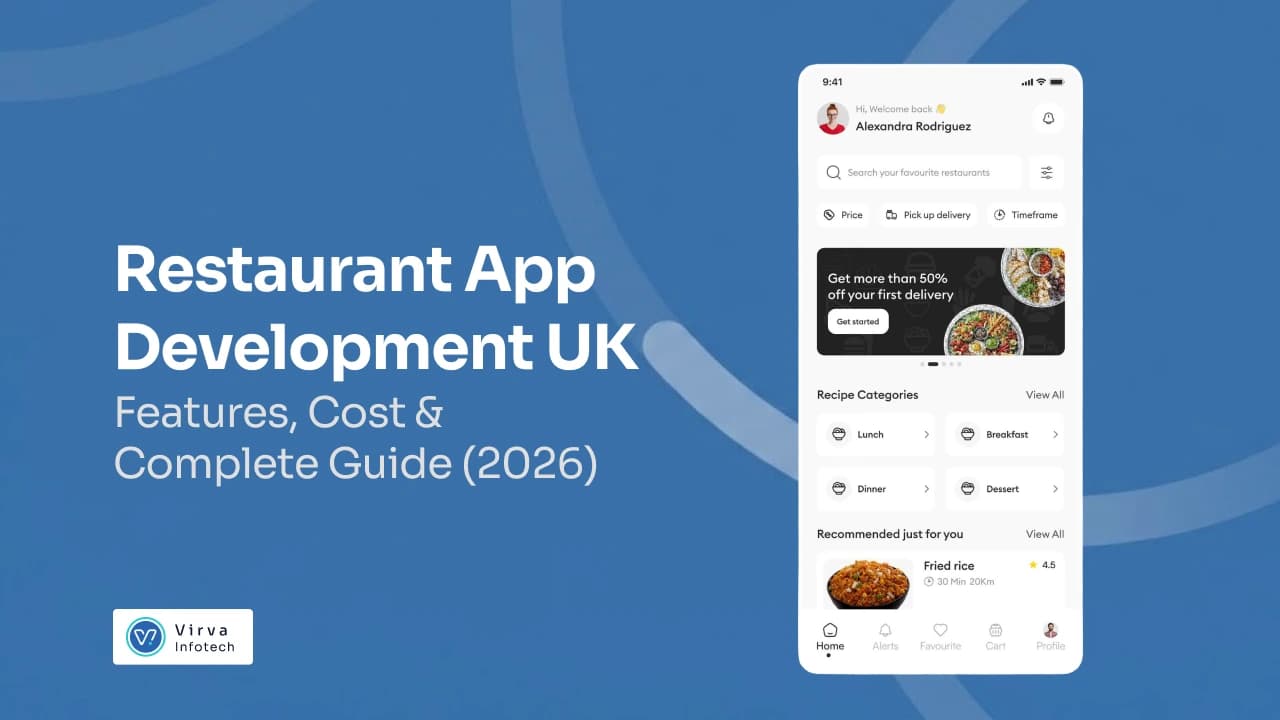
The UK restaurant industry is undergoing a significant digital shift, driven by changing consumer behaviour and increasing competition. From independent cafés in London to growing restaurant chains in Manchester, Birmingham, and Leeds, businesses are rapidly adopting mobile technology to stay relevant in a highly competitive market.
Today’s UK consumers expect convenience, speed, and personalisation. Whether it’s ordering a takeaway, booking a table, or earning loyalty rewards, customers prefer seamless mobile experiences. This shift has been heavily influenced by platforms like Uber Eats and Deliveroo, which have set new standards for user experience and on-demand services.
However, relying solely on third-party platforms comes with challenges — including high commission fees, limited customer data access, and reduced brand control. As a result, many UK restaurants are now investing in their own custom mobile apps to build direct relationships with customers and improve profit margins.
A restaurant app is no longer just a convenience — it has become a strategic asset. It enables restaurants to:
- Increase direct orders without third-party commissions
- Deliver personalised promotions and offers
- Improve customer retention through loyalty programmes
- Streamline operations with integrated ordering systems
In fact, many restaurants across the UK are seeing measurable growth after launching their own apps, particularly in urban areas where digital adoption is high.
In this comprehensive guide, we’ll explore everything UK businesses need to know about restaurant app development — from essential features and development processes to detailed cost breakdowns and real-world UK examples. Whether you’re a start-up restaurant or an established chain, this guide will help you make informed decisions and choose the right development approach.
Why UK Restaurants Need a Mobile App?
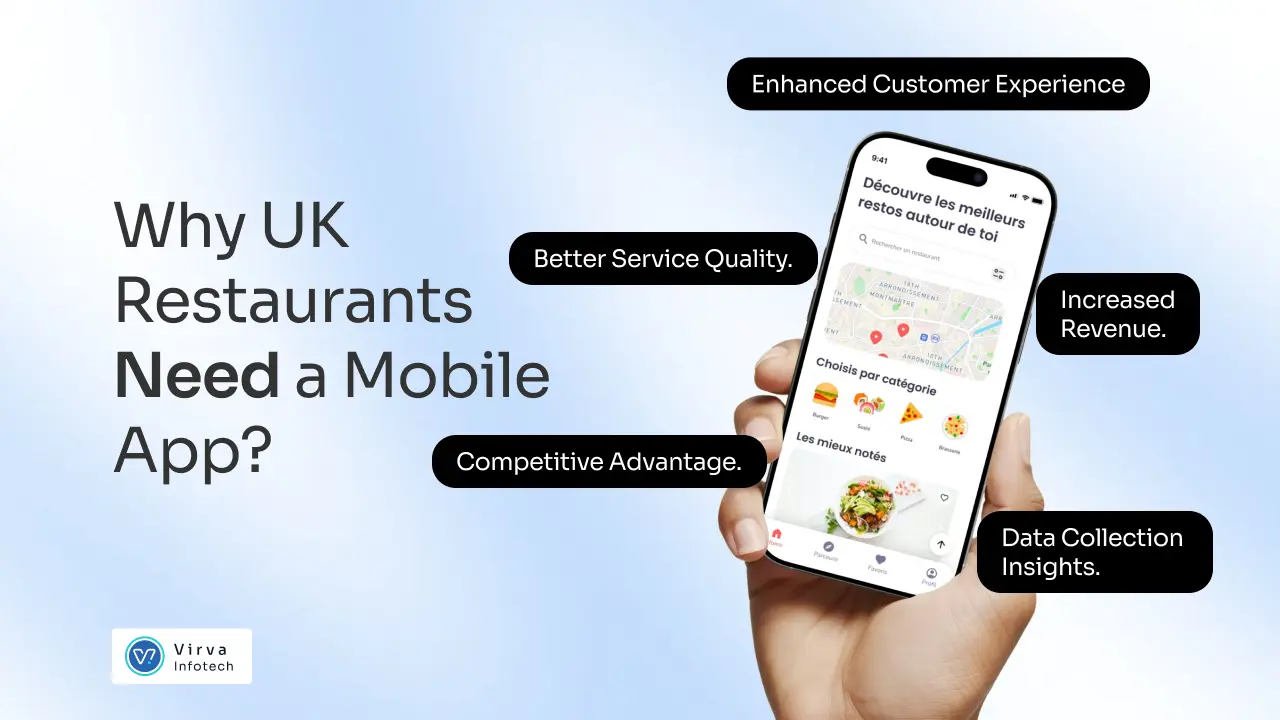
UK consumers are increasingly relying on mobile-first experiences, and platforms like Uber Eats and Deliveroo have significantly shaped their expectations around speed, convenience, and personalisation. As a result, restaurants across cities such as London, Manchester, and Birmingham are moving towards their own mobile apps to stay competitive and profitable. A dedicated restaurant app allows businesses to enable direct online ordering without paying high third-party commissions, build stronger customer relationships through personalised offers and loyalty programmes, and improve retention by keeping customers engaged with push notifications and exclusive deals.
At the same time, it enhances operational efficiency by streamlining order management, reducing manual errors, and integrating with internal systems like POS and inventory, ultimately helping restaurants deliver a faster, more seamless dining experience while maintaining full control over their brand and customer data.
Key benefits:
- Direct online ordering (no third-party commission)
- Improved customer retention
- Personalised offers and loyalty programmes
- Better operational efficiency
Types of Restaurant Apps in the UK
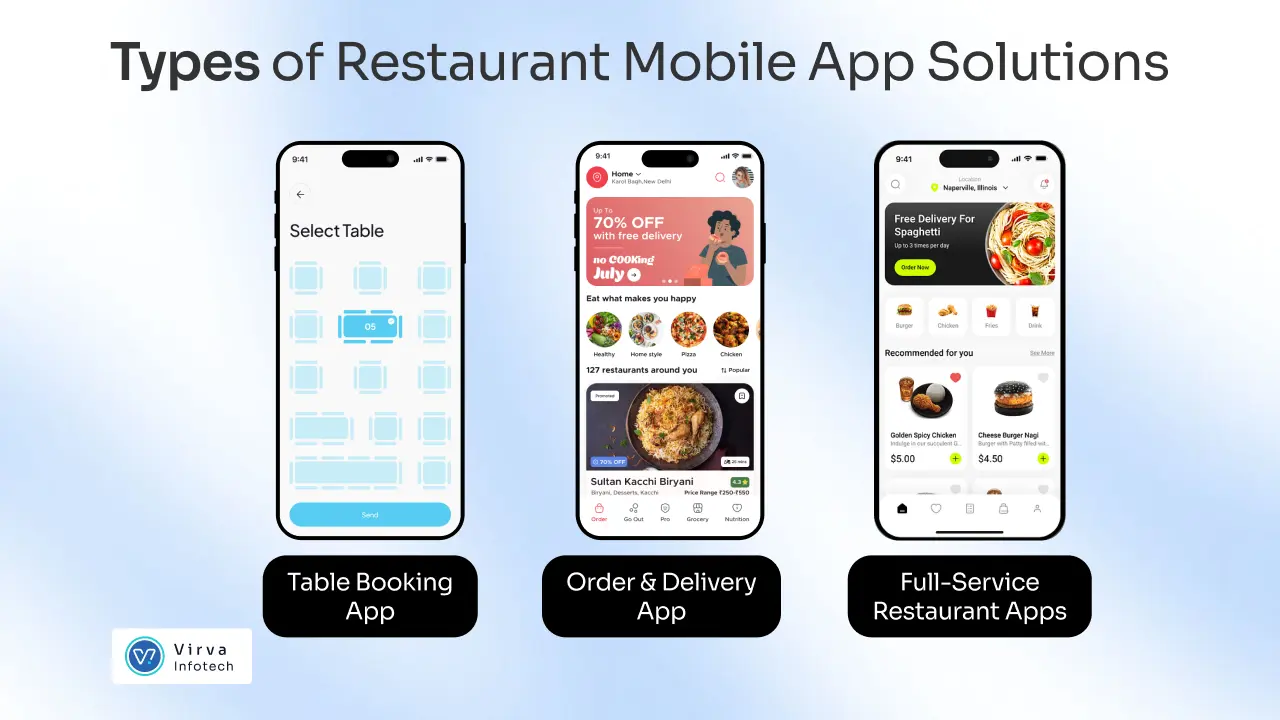
1. Online Ordering Apps
Online ordering apps allow customers to easily browse menus, customise their meals, and place orders directly from their smartphones. These apps help restaurants in cities like London and Manchester reduce dependency on third-party platforms while increasing direct sales and profit margins.
2. Table Booking Apps
Table booking apps are widely used in busy UK cities such as Leeds and London, where advance reservations are common. They enable customers to check availability, book tables instantly, and avoid waiting times, improving the overall dining experience.
3. Delivery Apps
Delivery apps are designed for restaurants that manage their own delivery operations. They allow businesses to handle orders, assign delivery staff, and track deliveries in real time, giving full control over logistics and customer service.
4. Loyalty & Rewards Apps
Loyalty and rewards apps help restaurants retain customers by offering points, discounts, and exclusive deals. These apps are particularly effective in encouraging repeat visits and building long-term customer relationships in competitive UK markets.
Must-Have Features for a Restaurant App
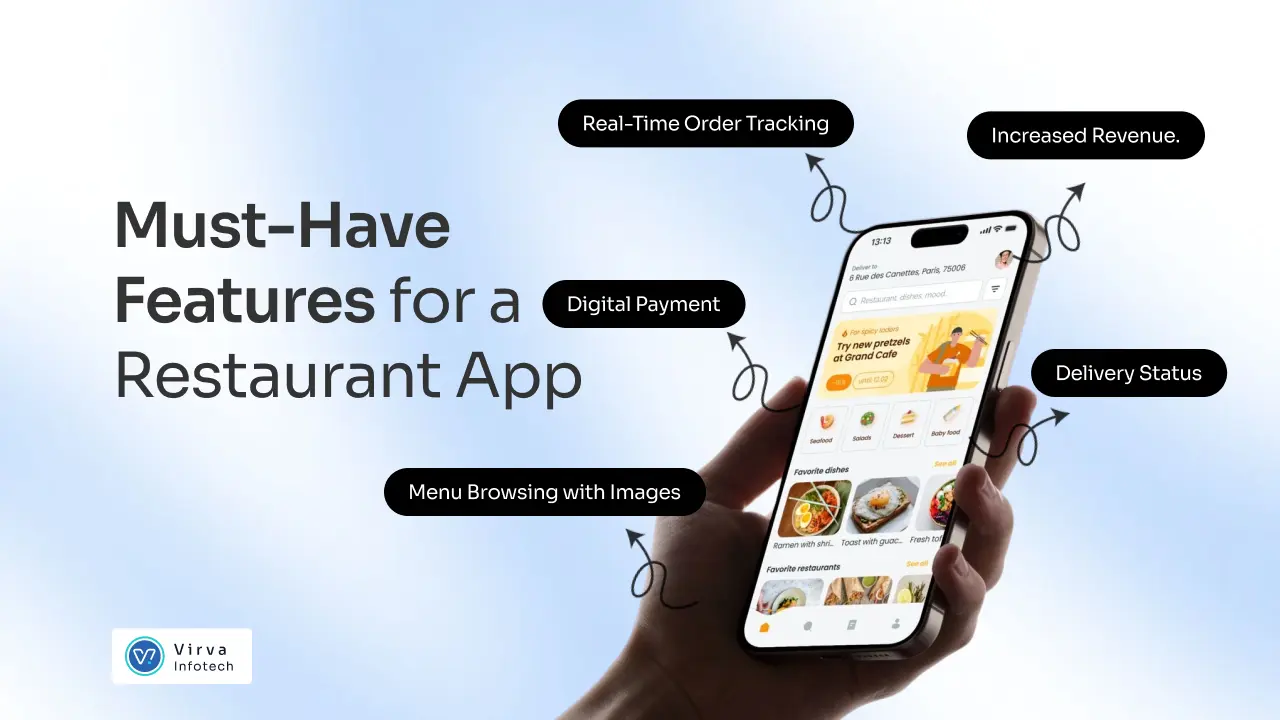
Customer Panel
Easy Registration/Login: A simple and secure sign-up process is essential for a smooth user experience. UK users prefer quick login options such as email, mobile number, or social sign-ins. Reducing friction at this stage helps increase conversions and app usage. It also allows restaurants to collect valuable customer data for personalisation.
Menu Browsing with Images: An interactive menu with high-quality images helps customers make quicker decisions. Clear categories, filters, and detailed descriptions improve usability and engagement. In competitive UK markets like London, visual appeal can directly impact order rates. A well-designed menu enhances the overall customer experience.
Secure Payment Gateway (UK-Compliant): Integrating secure and UK-compliant payment systems is critical for trust and legal compliance. Support for debit/credit cards, digital wallets, and contactless payments is expected by UK users. Ensuring GDPR and PCI compliance protects user data and transactions. A secure checkout process reduces cart abandonment.
Real-Time Order Tracking: Customers expect transparency when placing orders through mobile apps. Real-time tracking allows them to monitor order status from preparation to delivery. This feature improves customer satisfaction and reduces support queries. It also builds trust and reliability in your service.
Push Notifications: Push notifications help restaurants stay connected with their customers. They can be used to send order updates, promotional offers, and personalised deals. When used strategically, they significantly improve engagement and repeat orders. This is especially effective for retaining customers in competitive UK cities.
Restaurant Admin Panel
Order Management Dashboard: A centralised dashboard allows restaurant staff to manage all incoming orders efficiently. It helps track order status, prioritise tasks, and reduce delays. This improves operational workflow and ensures faster service. A well-structured dashboard is essential for handling high order volumes.
Menu and Pricing Control: Restaurants need the flexibility to update menus and pricing in real time. This is useful for seasonal changes, special offers, or stock availability. Quick updates help maintain accuracy and avoid customer dissatisfaction. It also allows businesses to respond faster to market demand.
Analytics and Reports: Analytics tools provide insights into customer behaviour, popular items, and sales trends. UK businesses can use this data to make informed decisions and improve performance. Detailed reports help optimise pricing, marketing strategies, and menu offerings. Data-driven decisions lead to better growth outcomes.
Customer Data Management: Managing customer data allows restaurants to personalise user experiences. It helps track order history, preferences, and engagement patterns. This data can be used for targeted marketing and loyalty programmes. Proper handling of data must comply with UK GDPR regulations.
Delivery Panel
Rider Tracking: Rider tracking enables real-time monitoring of delivery staff locations. It helps ensure efficient delivery operations and improves transparency. Customers can also see where their order is, enhancing trust. This feature is essential for smooth logistics management.
Route Optimisation: Route optimisation helps delivery drivers choose the fastest and most efficient paths. This reduces delivery time and fuel costs, especially in busy cities like Manchester and Birmingham. Faster deliveries improve customer satisfaction. It also increases the number of deliveries completed per day.
Delivery Status Updates: Providing timely delivery updates keeps customers informed throughout the process. Notifications such as “order picked up” or “out for delivery” improve communication. This reduces uncertainty and builds confidence in the service. It also minimises customer support queries.
Advanced Features
AI-Based Recommendations: AI-driven recommendations analyse customer behaviour to suggest relevant dishes. This enhances personalisation and increases average order value. UK restaurants are increasingly adopting AI to improve customer engagement. It creates a more tailored and modern user experience.
Contactless Ordering: Contactless ordering has become a standard expectation in the UK post-pandemic. Customers can order and pay directly through the app without physical interaction. This improves safety, speed, and convenience. It is especially popular in dine-in and takeaway scenarios.
Integration with POS Systems: Integrating the app with POS systems ensures seamless order and inventory management. Orders placed via the app are automatically synced with the restaurant’s system. This reduces manual errors and improves efficiency. It creates a unified operational workflow.
Multi-Location Management (For Chains): This feature is essential for restaurant chains operating across multiple UK cities. It allows businesses to manage menus, orders, and operations for different locations from a single platform. Centralised control improves consistency and efficiency. It also supports scalability as the business grows.
Restaurant App Development Cost in the UK
The cost of restaurant app development in the UK depends on several factors, including the number of features, app complexity, design quality, and whether you choose a UK-based or offshore development team. Businesses in cities like London and Manchester often invest more in advanced features to stay competitive, while smaller restaurants may start with a basic version and scale later.
| App Type | Estimated Cost | Details |
| Basic App | £3,000 – £8,000 | Suitable for small restaurants or start-ups. Includes essential features like menu display, simple ordering system, basic UI, and limited integrations. Ideal for businesses looking to establish a digital presence quickly. |
| Medium Complexity | £10,000 – £20,000 | Best for growing restaurants that need advanced features such as payment integration, real-time order tracking, push notifications, and an admin dashboard. Offers better performance, scalability, and user experience. |
| Advanced App | £20,000 – £30,000+ | Designed for large restaurants or chains operating in multiple UK cities. Includes AI-based features, loyalty programmes, POS integration, multi-location management, and high-end UI/UX. Suitable for businesses aiming for long-term growth and automation. |
Factors Affecting Restaurant App Development Cost in the UK
Number of Features: The more features you include, the higher the development cost. Basic apps with simple ordering and menu display are more affordable, while adding advanced features like real-time tracking, loyalty programmes, AI recommendations, or multi-location support increases both development time and cost. UK businesses often start with core features and scale gradually to manage budgets effectively.
Platform (iOS, Android, or Both): Choosing the platform significantly impacts the total cost. Developing for a single platform (either iOS or Android) is more budget-friendly, whereas building for both platforms increases cost due to additional development and testing efforts. Many UK restaurants opt for cross-platform solutions to reduce costs while reaching a wider audience across devices.
UI/UX Complexity: A simple and functional design costs less, but modern UK users expect visually appealing and highly intuitive interfaces. Custom animations, advanced navigation, and premium design elements increase development time and cost. Investing in high-quality UI/UX can improve customer engagement and conversion rates, making it a worthwhile expense.
Third-Party Integrations: Integrating external services such as payment gateways, POS systems, delivery APIs, or CRM tools adds to the overall cost. Each integration requires development, testing, and ongoing maintenance. However, these integrations are essential for improving efficiency and providing a seamless experience for both customers and restaurant staff.
👉 “Request a Free Restaurant App Development Quote (UK)”
Restaurant App Development Process
Requirement Analysis: This is the foundation of the entire project, where business goals, target audience, and app requirements are clearly defined. For UK restaurants, this may include deciding whether the app will focus on delivery, dine-in bookings, or both. Competitor analysis (especially apps used in cities like London and Manchester) is also conducted to identify opportunities. A well-defined scope helps avoid delays and keeps the project within budget.
UI/UX Design: In this stage, designers create the visual layout and user journey of the app. The focus is on delivering a clean, intuitive, and engaging experience that meets UK user expectations. Wireframes and prototypes are developed to show how the app will look and function before development begins. A strong UI/UX design ensures higher customer satisfaction and better conversion rates.
App Development: This is the core phase where developers build the frontend (user interface) and backend (server, database, APIs) of the app. Features like menu management, payment integration, order tracking, and notifications are implemented. The development approach may vary depending on whether the app is built for iOS, Android, or both. This stage requires close collaboration between developers, designers, and stakeholders.
Testing & QA: Before launch, the app undergoes rigorous testing to ensure it is bug-free and performs smoothly. This includes functional testing, performance testing, and security checks to meet UK compliance standards. Testing ensures that features like payments, tracking, and notifications work correctly across different devices. A well-tested app reduces the risk of negative user experiences after launch.
Launch & Deployment: Once testing is complete, the app is deployed to platforms like the Apple App Store and Google Play Store. Proper optimisation, including app descriptions and keywords, is done to improve visibility. UK businesses may also plan a marketing strategy around the launch to attract initial users. A smooth launch is crucial for gaining early traction and user feedback.
Ongoing Maintenance: After launch, continuous maintenance is required to keep the app updated and secure. This includes fixing bugs, improving performance, adding new features, and ensuring compatibility with OS updates. UK restaurants often update their apps based on customer feedback and changing market trends. Ongoing support ensures long-term success and scalability of the application.
Benefits of Restaurant App Development for UK Businesses
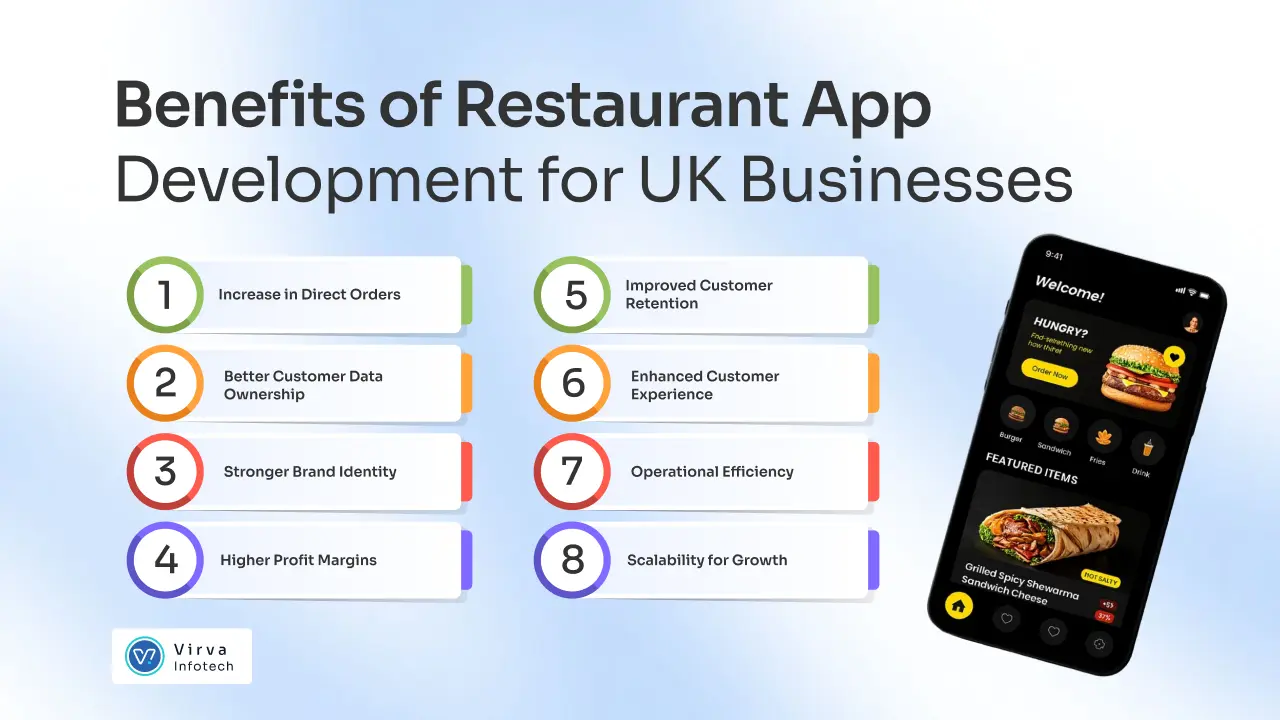
Increase in Direct Orders (No Third-Party Commission):
One of the biggest advantages of having your own restaurant app is the ability to accept direct orders without paying high commissions to platforms like Uber Eats or Deliveroo. In the UK, these platforms can charge significant fees per order, which reduces profit margins. By shifting customers to your own app, you can retain full revenue, offer better pricing, and improve overall profitability.
Better Customer Data Ownership:
With your own app, you gain complete access to customer data such as order history, preferences, and behaviour. This is something third-party platforms limit or control. UK restaurants can use this data to create personalised marketing campaigns, improve menu offerings, and make data-driven decisions. Owning your customer data gives you a strong competitive advantage.
Stronger Brand Identity:
A custom mobile app allows you to build and maintain your own brand presence rather than relying on third-party platforms where your restaurant is just one of many options. You can customise the app design, user experience, and communication style to reflect your brand. This helps UK businesses stand out in crowded markets like London and Manchester and build long-term customer trust.
Higher Profit Margins:
By eliminating third-party commissions and encouraging direct ordering, restaurants can significantly increase their profit margins. Even though there is an initial investment in app development, the long-term financial benefits often outweigh the cost. Many UK restaurants see improved revenue within months of launching their own app.
Improved Customer Retention:
Restaurant apps make it easier to engage and retain customers through features like push notifications, loyalty programmes, and exclusive offers. UK consumers respond well to personalised deals and rewards, which encourage repeat orders. Retaining existing customers is more cost-effective than acquiring new ones, making this a crucial benefit.
Enhanced Customer Experience:
A dedicated app provides a faster, smoother, and more personalised experience compared to traditional ordering methods. Features like real-time tracking, saved preferences, and easy reordering improve convenience. In competitive UK cities, delivering a superior user experience can be a key differentiator.
Operational Efficiency:
Restaurant apps streamline internal operations by automating order management, reducing manual errors, and integrating with systems like POS and inventory. This improves speed and accuracy, especially during peak hours. For busy restaurants in cities like Birmingham or Leeds, efficiency can directly impact customer satisfaction and business performance.
Scalability for Growth:
As your restaurant business grows, your app can scale with it by adding new features, locations, and services. Whether expanding to multiple outlets across the UK or introducing new offerings like subscriptions or catering, a custom app supports long-term growth. It provides a flexible digital foundation for future expansion.
Conclusion
Restaurant App development in the UK is no longer a luxury — it has become a strategic necessity for businesses that want to stay competitive in a fast-evolving digital landscape. From independent restaurants in London to growing chains in Manchester, Birmingham, and Leeds, adopting a mobile-first approach is helping businesses increase direct orders, improve customer engagement, and build long-term brand loyalty.
While third-party platforms like Uber Eats and Deliveroo have transformed the way customers order food, relying solely on them can limit your profitability and control. Investing in a custom restaurant app allows you to take ownership of your customer relationships, reduce commission costs, and deliver a more personalised and seamless experience.
The cost of restaurant app development in the UK can vary depending on your requirements, but with the right features, development approach, and long-term strategy, it becomes a highly valuable investment. Whether you are starting with a basic app or building a fully advanced solution with AI and multi-location support, the key is to align your app with your business goals and customer expectations.
Ultimately, a well-designed restaurant app not only improves operational efficiency but also positions your business for future growth in an increasingly digital UK market. If you’re looking to scale your restaurant, enhance customer experience, and maximise profits, now is the right time to invest in a tailored mobile app solution.
🚀 Get Started with Your Restaurant App
Ready to take your restaurant business to the next level in the UK market? Whether you’re a start-up in London or an established chain in Manchester or Birmingham, investing in a custom mobile app can significantly boost your orders, customer engagement, and overall growth.
👉 “Start Your Restaurant App Project – Get a Free Quote”
Connect with our expert team today to discuss your requirements, get a detailed cost estimate, and start building a high-performance app tailored to your restaurant business.